Trust Wallet Price Impact Warning: What It Means
Key Implications For Your Crypto Activity And Assets
What Exactly Is A Trust Wallet Price Impact Warning?
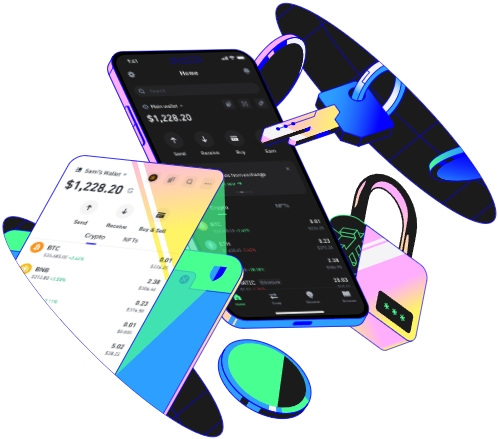
Trust Wallet is one of the most popular self-custody crypto wallets, used by over 60 million users globally to manage and trade digital assets across multiple blockchains. One of its most useful, yet often misunderstood, features is the price impact warning that pops up before executing a swap on integrated decentralized exchanges (DEXs) like Uniswap, PancakeSwap, or SushiSwap. To grasp what this warning means, you first need to understand price impact itself: it’s the difference between the expected price of a token swap and the actual price you’ll receive when the transaction is confirmed. Unlike centralized exchanges that use an order book, DEXs rely on automated market makers (AMMs) and liquidity pools, which means large trades or trades on low-liquidity pools can shift the token’s price significantly. The Trust Wallet price impact warning is a real-time alert that pulls data directly from the connected DEX’s on-chain liquidity pool, calculating how much your swap will move the token’s price. It also often displays an estimated dollar value of your potential loss, making it easier to grasp the real cost of the trade, not just a percentage. For example, if you plan to swap $5,000 worth of a token that has only $50,000 in its total liquidity pool, the price impact would be roughly 10% – and Trust Wallet will immediately flag this with a warning to inform you that you might get $500 less worth of tokens than you anticipated. This warning is not a security threat, but a critical safety tool designed to prevent new users from making costly mistakes they wouldn’t catch otherwise.
Common Scenarios That Trigger This Warning
The price impact warning isn’t random; it’s triggered by specific conditions related to liquidity, trade size, or market volatility. Let’s break down the most frequent scenarios with real-world examples. First, swapping low-liquidity meme tokens or newly launched altcoins is the top cause. For instance, during the 2024 Solana ecosystem boom, dozens of new dog-themed tokens launched with tiny liquidity pools – often under $100,000 – to avoid early scrutiny from traders and platforms. A user trying to swap $3,000 worth of one of these tokens would see a 15% price impact warning, since their trade uses a large portion of the small pool, pushing the token’s price down before the swap is fully processed. Second, executing large swaps relative to a pool’s size is another common trigger. Suppose you want to swap 100 ETH (valued at around $300,000 in mid-2024) for a niche DeFi token that only has $200,000 in its ETH liquidity pool. Your trade is 150% larger than the pool itself, leading to a projected price impact of 60% – a huge red flag that will definitely trigger the warning. Third, trading during periods of extreme market volatility can spike price impact even for moderate-sized trades. For example, when a token pumps 20% in an hour due to viral social media hype, liquidity providers may temporarily withdraw from the pool to lock in profits, reducing available liquidity by half. A user trying to swap $1,000 during this window might see their price impact jump from 2% to 12%, triggering the warning unexpectedly. Fourth, using lesser-known DEXs integrated with Trust Wallet can also lead to more frequent warnings, as smaller platforms often have shallower liquidity than major ones like Uniswap V3 or PancakeSwap V2.
How To Respond When You See The Warning
Seeing a price impact warning doesn’t mean you should abandon your swap – it means you need to adjust your approach to minimize losses or risks. Let’s walk through practical, actionable steps with examples. First, start by checking the exact percentage of the price impact shown in the warning, along with the estimated dollar loss. If it’s below 5%, the impact is minor, and you can usually proceed without major issues, but always double-check the expected amount of tokens you’ll receive to confirm it aligns with your initial calculations. If the impact is between 5% and 10%, it’s moderate – you might want to split your swap into smaller chunks to reduce the total impact. For example, instead of swapping $5,000 of a token with an 8% impact, do two swaps of $2,500 each; each smaller trade will only pull a portion of the pool, cutting the total impact to around 4% per swap, which saves you $200 in value. If the impact is over 10%, that’s a strong signal to re-evaluate your trade and consider alternatives. Next, look for alternative trading pairs or DEXs: maybe swap via a more liquid DEX, or use a different pairing (like USDT instead of ETH) that has deeper liquidity. For instance, a token might have a $100,000 liquidity pool with ETH, but a $500,000 pool with USDT – swapping USDT instead of ETH could lower your price impact to 2% or less. You should also verify the token’s legitimacy before proceeding, as some scammers create fake low-liquidity pools to manipulate prices. A case from early 2024: a user ignored a 35% price impact warning on Trust Wallet, swapped $2,000 for a new token, and later found the pool had only $10,000 (not the $50k listed on the token’s public page). The token’s price dropped 40% immediately after their swap, and they lost $800. To avoid this, always check the token’s contract on a blockchain explorer like BscScan or Etherscan – look for a verified contract, no hidden mint or burn functions, and recent liquidity provider transactions to confirm the pool is real. Finally, if you still want to proceed despite the warning, adjust your slippage tolerance in Trust Wallet settings. Slippage is the allowable difference between the expected price and the actual price. Set it to match or slightly higher than the price impact shown (e.g., if impact is 15%, set slippage to 16%), but never set it higher than 20% – higher slippage makes you vulnerable to front-running by malicious actors who exploit blockchain data to trade before you. This balance lets your transaction go through without unnecessary losses, while keeping your assets safe from exploitation.
TAG:
